A conversation with O2 Telefónica Germany’s General Counsel Marcel Ritter and Head of Legal Digital Solutions Christian Wünsche on how AI is reshaping corporate legal work. Marcel and Christian explore how daily workflows are being retooled with practical AI use cases, how teams and roles – from lawyers to legal ops and engineering – are evolving, what governance and risk controls are needed for responsible adoption, and how vendor ecosystems and market expectations are rapidly shifting.
1. A Legal Function Under Structural Pressure
Few industries are as exposed to legislative and regulatory density as telecommunications. For Telefónica Germany, new European and national legislation, from consumer laws to security, supply chain and sanctions, arrives continuously, often in the form of long, complicated texts that must be understood, interpreted, and operationalized quickly.
For Marcel Ritter, General Counsel at Telefónica Germany, this pressure is not theoretical. It shapes how legal teams are composed and trained, how work is prioritized, and how external counsel is used. Together with Christian Wünsche, Head of Legal Digital Solutions and one of the architects of Telefónica Germany’s legal tech strategy, Marcel has been grappling with a fundamental question:
How to leverage that AI can read, summarize and produce text much quicker than a human – responsibly, reliably and smartly?
Their answer is not a single tool, but a shift in how legal capability is built. AI, and specifically AI assistants like BEAMON, play a central role in that shift.
“We went from automating paperwork to automating predefines processes. What’s different now is that we’re finally touching the thinking part of legal work,” says Christian.
2. From Research Bottlenecks to Instant Orientation
One of the earliest and most impactful uses of BEAMON at Telefónica Germany is also one of the simplest: making sense of large, complicated texts. Marcel explains:
“We deal with long legal texts, from large sets of agreements with multiple annexes to court documents. AI can read, synthesize, and provide an explanation significantly faster. Put simply, AI helps us to get at least an idea much faster. In fact, AI is increasingly doing more than just giving us an idea, and it is doing so in an increasingly stable and reliable manner.”
Another example revolves around legislative texts: Draft legislation, including national and EU regulations regularly run hundreds of pages. In the past, understanding a new legal framework meant days of reading — internally or externally. Today, that initial orientation can happen in minutes.
“If I look at a 300-page draft EU legislative act, extracting, analysing and describing its structure used to take long hours, if not days, sometimes even weeks. Today, we can get a first analysis within minutes that gives us at least an idea.”
The team uses AI to summarize, structure, and contextualize complicated legal materials — not as a final authority, but as a way to dramatically reduce the cost of entry into a topic. This changes who can engage with new legal issues, and when.
It also changes horizon scanning and regular updates. While identifying relevant developments remains difficult, once material is identified, AI like BEAMON makes it feasible to digest multiple sources quickly and consistently.
“The legislative horizon scanning itself is still a community effort. But once you have the documents, having them summarized and compared is genuinely impressive.”
3. Drafting, Risk Thinking, and the “Fast Associate”
Beyond summarization, Telefónica Germany uses BEAMON for first drafts of legal documents, exploratory risk discussions, and everyday legal questions. Contracts, memos, or issue outlines no longer start from a blank page.
Marcel describes BEAMON not as an oracle, but as a highly productive junior colleague:
“It’s a super-fast legal answering machine. It reads faster, writes faster — and if you understand the subject, you can correct what needs correcting.”
This framing is important. According to Marcel, AI does not remove the need for legal expertise; it amplifies it. Lawyers remain responsible for judgment, context, and final decisions. But the time spent on mechanical work drops dramatically.
That effect compounds. When reading and drafting become cheap, legal teams can explore more options, test assumptions, and challenge their own thinking earlier.
4. Scale Changes Everything — Especially for Law Firms
They note that the market is already exhibiting early, tangible effects, with Marcel and Christian drawing a direct line between AI adoption and emerging structural shifts in the legal sector. Smaller law firms, Marcel notes, are now suddenly able to gain scale. Where time spent reading and drafting used to cap how much work a lawyer could take on, AI removes that ceiling.
“The small lawyer used to be limited by how long it took to read and write. Now reading takes much less time, and drafting almost none. That changes a lot.”
For in-house teams, the effect is just as profound, but in a different direction. Telefónica Germany has significantly reduced its external legal spend, not by changing risk appetite, but by increasing internal autonomy.
“If the tool is faster and cheaper than outsourcing time, then the tool is the right choice.”
AI allows in-house lawyers to quickly assess whether an issue is relevant, serious or needs closer attention or action. External counsel is still used, but later, more selectively, and with much better preparation.
5. Human Expertise vs. Machine Knowledge and the limits of AI
A recurring theme in the discussion is trust. Marcel Ritter draws a comparison to medicine: people expect doctors to use modern diagnostic tools, but they still want a human conversation when the stakes are high. The same applies to law. What matters is not raw AI output, but expertise embedded into the system.
“I’m not looking at random sources. I’m looking at curated, expert knowledge. That makes the probability of correct answers much higher.”
The role of an AI assistant is to act as an expert system — one that accelerates access to knowledge that legal professionals already trust, while remaining transparent and correctable.
Both Marcel and Christian are clear-eyed about limits. AI will not replace the lawyer as business partner, strategist, or advisor in high-impact decisions.
“The higher the impact, the more people want to talk to a real person. Not because of logic, but because of psychology. And of course they expect this person to be state of the art skilled and trustworthy.”
What does change is everything around that moment: preparation, analysis, and orientation. AI-supported legal teams can move faster, cover more ground, and operate with fewer handoffs. For Telefónica Germany, this is not about reducing headcount. It is about keeping up with legislative and regulatory growth without being overwhelmed.
“The volume of legislation isn’t slowing down. If we want to keep up, our people need tools that multiply their impact”, summarizes Christian.
6. A Market at an Inflection Point
Looking at the broader market, Marcel is blunt: legal work is undergoing a structural transition comparable to the shift from typewriters to computers:
“Anyone who still goes to the library first will simply be too slow.”
AI adoption is no longer experimental. The threshold has been crossed, not because AI is perfect, but because it is good enough to change behaviour.
AI, in this context, is not just another tool. It represents a new layer of legal infrastructure — one that enables legal teams to think faster, act earlier, and engage more strategically with the business. And that, for Telefónica Germany, is where the real value lies.

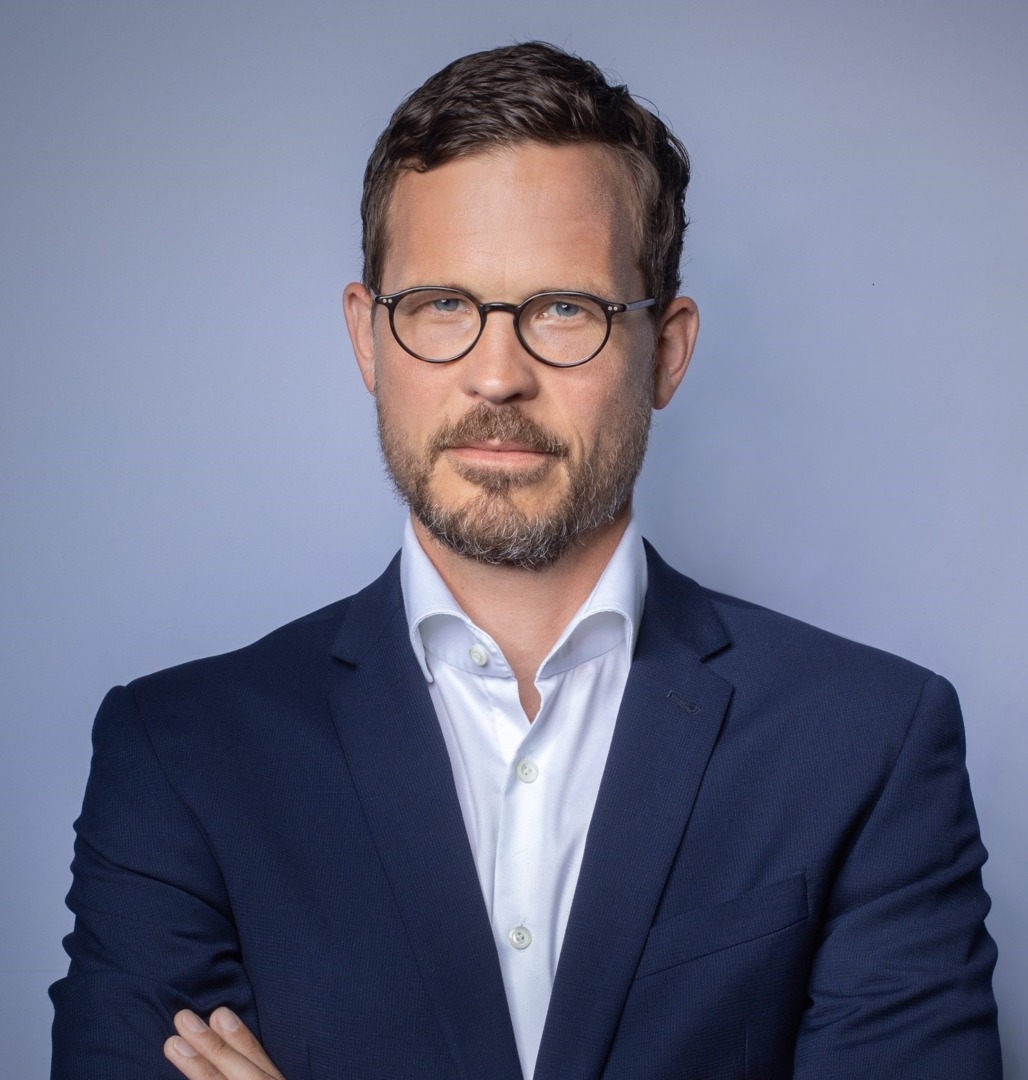
Marcel Ritter — General Counsel, Telefónica Germany
Marcel Ritter serves as General Counsel and Compliance Officer at Telefónica Germany, one of the country’s leading telecommunications providers. With a legal career spanning more than two decades, Marcel brings deep strategic and operational experience to the intersection of law, business, and technology. He joined Telefónica (then VIAG Interkom) in the early 2000s and, since 2006, has held a succession of senior leadership roles in the company’s legal and corporate affairs functions. He has been instrumental in major corporate milestones, including Telefónica Germany’s IPO in 2012, the acquisition and integration of E-Plus in 2014, and the ongoing evolution of the company’s legal operating model.
An experienced in-house lawyer and thought partner to the business, Marcel advocates for legal functions that go beyond risk mitigation to deliver timely, actionable insight across complex regulatory landscapes. He champions practical innovation that empowers legal teams to engage earlier and more strategically with internal stakeholders, balancing governance with agility. His stewardship of legal automation and generative AI initiatives reflects a belief that technology should augment, and not replace, human judgment, enabling in-house teams to absorb complexity at scale while maintaining high standards of precision, control, and alignment with business priorities.
Christian Wünsche — Head of Legal Digital Solutions, Telefónica Germany
Christian Wünsche heads the Legal Digital Solutions department at Telefónica Germany, where he and his team are responsible for the strategic development of digital and AI-enabled capabilities for the legal and compliance organization. His journey in this space began in 2021, when he started driving legal operations and technology initiatives at Telefónica — work that has since evolved into leading a dedicated department focused on transforming how legal expertise is applied and consumed throughout the business.
Before his current role, Christian gained broad experience in digital transformation and technology leadership, including founding a startup in the connected-car space and leading large-scale industry initiatives such as the WhiteSpot cooperation with Deutsche Telekom and Vodafone to improve mobile coverage. With a blend of technical fluency and strategic perspective, he bridges the worlds of legal, technology, and enterprise operations — enabling Telefónica Germany’s legal team to scale expertise through structured tools and AI-augmented workflows. Christian’s work exemplifies how legal tech leadership can unlock greater autonomy, transparency, and accelerated decision-making across complex corporate environments.